
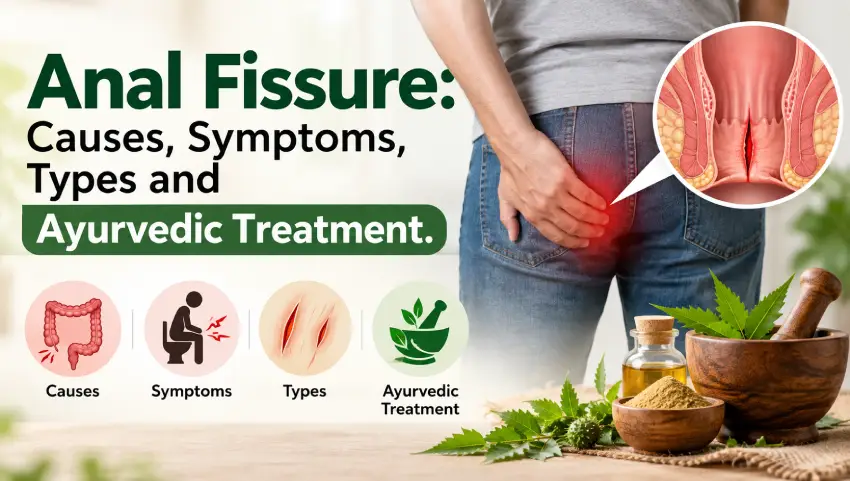
Have you ever felt a sharp, burning pain while passing stool, followed by a stinging sensation that lasts for hours? If yes, you might be dealing with an anal fissure. It is more common than most people realise, but very few talk about it openly because of the discomfort and embarrassment involved.
At Astang Ayurved Hospital, Pune, Dr. Amit Kashid, a best ayurvedic doctor in Pune with 14+ years of experience, has helped countless patients find lasting relief through Fissure Ayurvedic Treatment in Pune. In this blog, we will explain everything about anal fissures — their causes, symptoms, types, complications, and most importantly, how Ayurveda can help you heal naturally and prevent it from coming back.
An anal fissure is a small tear or crack that occurs in the lining of the anal canal. This thin tear may look small, but it can cause a surprising amount of pain, especially during and after bowel movements. Anal fissures are quite common and can affect people of any age, but they are most often seen in infants, pregnant women, and adults under the age of 40.
Understanding anal fissure causes is the first step towards treating and preventing them. So, what causes fissure? Here are the most common reasons:
The symptoms of anal fissure are usually quite noticeable and uncomfortable:
Many patients also ask, do fissures cause itching? Yes, itching is a fairly common symptom, especially as the wound tries to heal and the surrounding skin becomes irritated.
Anal fissures are generally classified into two types:
Anal fissure and piles are often confused with each other since both can cause pain, bleeding and discomfort during bowel movements. However, there are some key differences:
If you are unsure which condition you are dealing with, it’s best to get examined by an experienced doctor rather than guessing based on symptoms alone.
Ignoring an anal fissure for too long can lead to several complications:
Some people are more prone to developing anal fissures than others. Common risk factors include:
You should consult a doctor if:
Early consultation prevents the fissure from becoming chronic and reduces the risk of complications.
In Ayurveda, anal fissure is closely related to a condition called Parikartika. This term has been described in classical Ayurvedic texts as a cutting, tearing type of pain in the anal region, often mentioned as a complication following therapies like Vamana (therapeutic emesis) and Virechana (therapeutic purgation), as well as a symptom associated with certain digestive disorders.
According to Ayurveda, an imbalance in Vata dosha is considered the primary root cause of Parikartika (anal fissure). Vata governs movement and dryness in the body, and when it gets aggravated — often due to poor digestion, chronic constipation, or excessive straining — it leads to dryness, roughness and cracking of the delicate anal tissue.
This is why ayurveda fissure treatment doesn’t just focus on healing the local wound. It also looks deeply into your digestion, bowel habits and overall Vata balance, since treating only the surface symptom without correcting the root cause often leads to recurrence.
When it comes to ayurvedic treatment of fissure, a combination of internal medicines, external applications and lifestyle correction usually gives the best results.
Ayurvedic formulations that pacify Vata dosha and improve digestion form the core of ayurvedic medicine for fissures. Some commonly used ones include:
For local relief and faster healing, doctors often recommend:
A warm sitz bath using medicated Kwath (herbal decoction) helps relax the anal sphincter muscles, improves blood circulation to the area, and provides significant relief from pain and spasms. This is one of the most effective ayurvedic remedies for fissure, especially when done consistently.
For fissures that don’t respond to medicines and sitz baths — especially chronic, non-healing cases — Kshar Sutra therapy is often recommended. This ancient Ayurvedic para-surgical method uses a medicated thread to release the muscle spasm and heal the fissure from within, without the need for major surgery. If you’d like to understand this treatment in detail, you can read our complete guide on Kshar Sutra treatment for piles and fistula.
Many patients wonder, is fissure curable with Ayurveda? In most cases, yes — with the right combination of internal medicine, external application, and lifestyle changes, both acute and chronic fissures respond very well to Ayurvedic treatment.
A good fissure remedy always includes dietary and lifestyle correction alongside medicines.
Foods to eat:
Foods to avoid:
Bowel habit tips:
Preventing anal fissures is much easier than treating them. Here’s what helps:
Unlike treatments that only focus on symptom relief, Ayurveda takes a root-cause approach — correcting digestion, balancing Vata dosha, and healing the tissue naturally. This makes it especially effective and safe for long-term or recurrent fissure cases, without the side effects associated with repeated medicated creams or surgical procedures.
If you are searching for reliable piles fissure ayurvedic treatment or specifically looking for Fissure Ayurvedic Treatment in Pune, Dr. Amit Kashid at Astang Ayurved Hospital offers personalised care based on a detailed understanding of your digestion, lifestyle and the severity of your condition. With his experience in treating anorectal disorders, Dr. Amit Kashid ensures that each patient receives the right combination of internal medicine, external therapy and dietary guidance for complete healing.
Anal fissures are common, but they are also very treatable — especially when addressed early. With the right combination of Ayurvedic medicines, external applications, dietary changes and, if needed, therapies like Kshar Sutra, most patients experience complete and lasting relief.
If you are looking for the best ayurvedic hospital in Pune for reliable Fissure Ayurvedic Treatment in Pune, Consult Dr. Amit Kashid. With his 14+ years of experience in treating anorectal conditions, Dr. Amit Kashid will guide you through a personalised treatment plan suited to your condition.
Visit Astang Ayurved Hospital, Pune, today and take the first step towards pain-free, natural healing.
Yes, acute fissures often heal on their own within a few weeks with proper diet, hydration and sitz baths. Chronic fissures usually need medical or Ayurvedic treatment.
Yes, Ayurvedic treatment — including internal medicines, external oils and therapies like Kshar Sutra — is very effective for chronic and recurring fissures.
Parikartika is the Ayurvedic term closely related to anal fissure, described as a cutting or tearing pain in the anal region caused by an aggravated Vata dosha.
Acute fissures may heal within 2-3 weeks with Ayurvedic care, while chronic fissures can take longer, often 6-8 weeks, depending on severity.
Diet plays a big role in prevention and healing, especially for mild or acute fissures, but chronic fissures usually need additional medicines or therapy alongside dietary changes.
WhatsApp us